Navratri Light Show – A Celebratory Fusion of Tradition and Gameplay 🎉
Navratri Light Show is more than just a mobile or PC game – it’s a cultural celebration encapsulated in interactive gameplay that resonates deeply with Indian audiences, both in the country and across the global diaspora. Launched in October 2020 by Desi Games Studio, a Ahmedabad-based gaming startup, the game was conceptualized to bridge the gap between traditional Indian festivals and modern digital entertainment, offering players a chance to engage with Navratri’s rich rituals, vibrant colors, and joyous spirit through a screen.
At its core, Navratri Light Show combines elements of puzzle-solving, rhythm-based challenges, and social multiplayer interactions, all woven together with the cultural fabric of Navratri – the nine-night festival dedicated to the worship of Goddess Durga and her nine avatars. What sets this game apart from other festive titles is its unwavering commitment to authenticity: every visual, sound, and gameplay mechanic is rooted in real-world Navratri traditions, from the design of rangoli patterns to the rhythm of garba and dandiya beats.
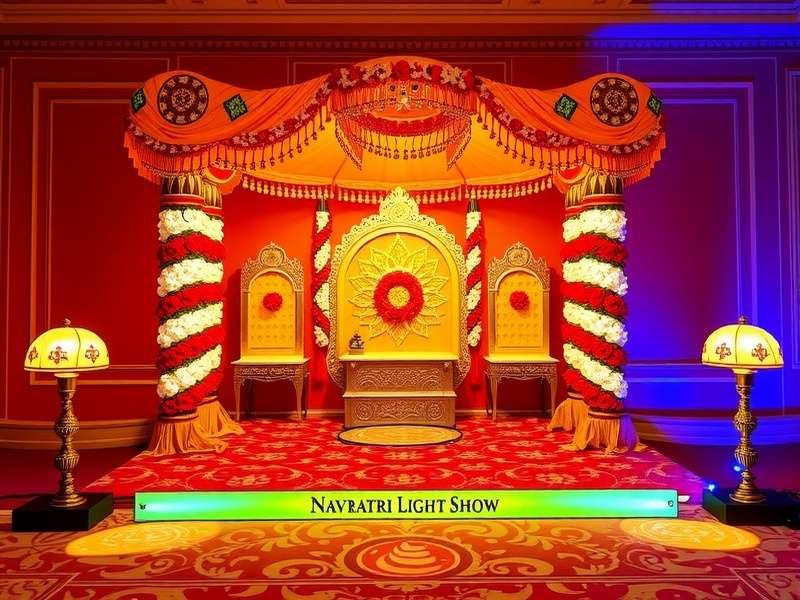
For those unfamiliar with Navratri, the festival holds immense cultural and religious significance in India, celebrated with great fervor across regions. Each night of the nine-day festival is dedicated to a different form of Goddess Durga, and celebrations include rituals like puja (worship), garba (a folk dance performed in circles), dandiya raas (dance with decorated sticks), kanya puja (worship of young girls), and the decoration of homes and mandaps (temporary shrines) with lights, rangoli, and flowers. Navratri Light Show takes these elements and transforms them into engaging gameplay, allowing players to “participate” in the festival regardless of their location or ability to attend physical celebrations.
Over the years, Navratri Light Show has evolved from a niche cultural game to a mainstream hit, amassing over 5 million downloads on Android and iOS platforms combined, with a dedicated player base that spans all age groups. Parents appreciate the game’s ability to teach children about Indian traditions in a fun, interactive way, while young adults and teenagers are drawn to its competitive multiplayer modes and social features. The game’s success is a testament to the growing demand for “desi games” – titles that celebrate Indian culture and offer a refreshing alternative to the Western-dominated gaming landscape.
Etymology and Cultural Roots 🕉️
Origin of the Name
The name “Navratri Light Show” is a deliberate blend of two key elements: “Navratri,” the festival at the heart of the game, and “Light Show,” which refers to the game’s central mechanic of arranging and activating decorative lights to progress through levels. The term “Navratri” is derived from Sanskrit, with “Nav” meaning “nine” and “Ratri” meaning “night” – a direct reference to the festival’s nine-day duration.
The inclusion of “Light Show” in the name is not just a nod to the gameplay but also a reflection of a beloved Navratri tradition: the decoration of homes, mandaps, and public spaces with lights. During Navratri, it’s common to see buildings adorned with fairy lights, diyas (earthen lamps), and neon lights, creating a magical, festive atmosphere. Navratri Light Show brings this tradition to life digitally, allowing players to create their own virtual light displays while engaging with other cultural elements.
Navratri’s Significance in Indian Culture
To understand Navratri Light Show’s appeal, one must first grasp the cultural weight of Navratri itself. The festival is celebrated across India, though traditions vary by region, and it holds both religious and social significance. Religiously, Navratri honors Goddess Durga, who is believed to have defeated the demon Mahishasura after a nine-day battle, symbolizing the triumph of good over evil.
Social-wise, Navratri is a time for community gathering, music, dance, and feasting. In Gujarat, garba and dandiya raas are the highlight, with people dressing in traditional attire (chaniya choli for women, kediyu and dhoti for men) and dancing in circles to folk music. In West Bengal, Navratri coincides with Durga Puja, a grand celebration featuring elaborately decorated pandals (temporary temples) and the worship of Durga idols. In North India, kanya puja (worship of nine young girls representing the nine avatars of Durga) is a key ritual, while in South India, families arrange “bommai golu” – a display of dolls and figurines depicting mythological scenes.
Navratri is also a time for fasting, prayer, and spiritual reflection, with many devotees abstaining from non-vegetarian food, alcohol, and other indulgences during the nine days. The festival culminates on the tenth day, known as Vijayadashami (or Dussehra), which celebrates Durga’s victory over Mahishasura and is marked by the immersion of Durga idols in water (in Bengal) or the burning of effigies of Ravana (in North India).
Fusion of Light Festivities and Gameplay
Light has always been a central theme in Indian festivals – from Diwali’s “festival of lights” to Navratri’s illuminated mandaps. In Navratri, lights symbolize the dispelling of darkness (ignorance) and the triumph of light (knowledge and goodness). Navratri Light Show takes this symbolism and turns it into a core gameplay mechanic, making light arrangement and activation the key to progressing through the game.
The game’s developers worked closely with cultural experts and anthropologists to ensure that every aspect of the light decorations is authentic. For example, the game includes traditional light types like diyas (earthen lamps), akash kandils (hanging lanterns), and phoolon ki chaadar (flower garlands with embedded lights), each with designs inspired by regional Navratri traditions. Players are not just arranging lights randomly; they are recreating the same patterns and arrangements that are used in real-world Navratri celebrations.
This fusion of light traditions with gameplay is what makes Navratri Light Show unique. Unlike other puzzle games that use generic themes, Navratri Light Show’s focus on light is deeply cultural, allowing players to connect with their heritage while enjoying a fun, challenging game. Whether you’re a devotee who celebrates Navratri every year or someone who’s never heard of the festival, the game offers an accessible way to learn about and participate in this important Indian tradition.
Gameplay Mechanics 🎮
Core Objective
The core objective of Navratri Light Show is to “prepare for Navratri” by completing a series of tasks centered around decorating virtual mandaps, performing traditional rituals, and participating in festive activities. Players take on the role of a “Navratri Organizer” who must ensure that their mandap is ready for worship, their rangoli is perfect, their garba moves are on point, and their guests (other players or AI characters) are entertained.
At the start of the game, players are given a basic mandap with minimal decorations. As they complete levels and earn rewards, they can unlock new decorations, light types, rangoli designs, and avatar customizations. The ultimate goal is to create the most beautiful and culturally authentic mandap possible, earn the title of “Navratri King/Queen,” and win exclusive in-game prizes and real-world rewards (like traditional handicrafts or Navratri gift hampers).
What makes the core objective engaging is its flexibility. Players can choose to focus on one aspect of the game (like light decoration or garba dancing) or explore all of them, making the game accessible to different playstyles. Whether you’re a casual player who wants to relax and decorate or a competitive player who wants to climb the leaderboards, Navratri Light Show has something for everyone.
Game Modes
Navratri Light Show offers three main game modes, each designed to cater to different player preferences and skill levels. Let’s take a detailed look at each mode:
1. Single Player Mode (Story Mode)
Single Player Mode is the game’s main story-driven mode, where players follow a narrative about a family preparing for Navratri. The story is set in a small Indian town, and players must help the family overcome various challenges to ensure their Navratri celebrations are a success. The mode is divided into nine chapters (one for each night of Navratri), each with a set of tasks that correspond to the rituals of that particular night.
For example, on the first night (Shailaputri Puja), players must arrange diyas around the mandap in a specific pattern (inspired by Gujarati traditions). On the fifth night (Skandamata Puja), players must create a rangoli using five different colors (representing the five elements). On the ninth night (Siddhidatri Puja), players must perform a garba dance in rhythm with a traditional bhajan to “awaken” the goddess.
Each chapter ends with a “Puja Ceremony” where players can offer virtual prasadam (sweets and fruits) to the goddess and receive blessings that unlock new features or rewards. The story mode is perfect for players who want to learn about Navratri traditions in a structured way, as each task is accompanied by a short explanation of its cultural significance.
2. Multiplayer Mode
Multiplayer Mode allows players to compete or collaborate with friends and other players from around the world. There are two sub-modes within Multiplayer:
- Competition Mode: Players go head-to-head in challenges like “Rangoli Race” (create a rangoli as quickly as possible), “Light Arrangement Battle” (arrange lights to match a reference image), or “Garba Dance-Off” (perform garba moves in rhythm to earn points). The winner of each challenge earns in-game currency (called “Navratri Coins”) and climbs the global leaderboard.
- Collaboration Mode: Players team up to create a shared mandap for a virtual Navratri celebration. Each player contributes to a different aspect of the mandap (e.g., one player decorates with lights, another creates the rangoli, another chooses the music). The team with the most beautiful and authentic mandap (voted on by other players) wins rewards.
Multiplayer Mode is a hit among young players, as it allows them to connect with friends and show off their Navratri skills. The game also includes a chat feature (with pre-approved messages to ensure safety) that allows players to communicate and coordinate during collaborative challenges.
3. Festival Special Mode
Festival Special Mode is only available during the actual Navratri season (usually in September or October) and offers limited-time events and challenges that are tied to real-world Navratri celebrations. This mode is highly anticipated by players, as it introduces exclusive content that can’t be accessed at other times of the year.
Examples of Festival Special Mode events include:
- “Pandal Hop Challenge”: Players visit virtual pandals inspired by real-life pandals from cities like Kolkata, Ahmedabad, and Delhi, completing tasks to collect rewards.
- “Dandiya Raas Tournament”: A competitive dance mode where players perform dandiya moves in sync with live-streamed garba music from popular Navratri events.
- “Kanya Puja Quest”: Players must find and “worship” nine virtual kanyas (young girls) by offering them virtual prasadam, unlocking rare decorations in the process.
Festival Special Mode also includes exclusive rewards like limited-edition avatar outfits (e.g., a chaniya choli designed by a famous Gujarati fashion designer) and real-world prizes (e.g., tickets to a Navratri event in their city). This mode helps to keep the game fresh and relevant, encouraging players to return year after year.
Controls and User Interface
Navratri Light Show is designed to be accessible to players of all ages and skill levels, with intuitive controls and a user-friendly interface that reflects Indian design aesthetics.
Mobile Adaptation
The game’s mobile version (available on Android and iOS) uses touch controls that are simple to learn. For light arrangement tasks, players tap and drag lights to place them on the mandap. For rangoli creation, players use their fingers to draw patterns on the screen, with options to choose colors and brush sizes. For dance modes (garba and dandiya), players tap on on-screen buttons in rhythm with the music, similar to games like Guitar Hero or Dance Dance Revolution.
The mobile UI features a vibrant, colorful design with icons inspired by traditional Indian elements (e.g., a diya for the home screen, a dandiya stick for the multiplayer mode, a rangoli for the customization menu). The text is available in multiple Indian languages (Hindi, Gujarati, Bengali, Tamil, Telugu, and English), making the game accessible to non-English speakers.
PC Controls
The PC version (available for Windows and macOS) supports both keyboard/mouse and controller inputs. Keyboard/mouse controls are similar to the mobile version, with players using the mouse to drag and drop lights and draw rangoli, and the keyboard arrow keys to perform dance moves. Controller support is ideal for dance modes, as it allows for more fluid movements and a more immersive experience.
The PC UI is optimized for larger screens, with a more detailed mandap view and additional customization options. Players can also switch between full-screen and windowed mode, making it easy to multitask while playing.
Accessibility Features
Navratri Light Show includes a range of accessibility features to ensure that all players can enjoy the game, regardless of their abilities. These features include:
- Adjustable difficulty levels: Players can choose from “Easy” (for kids and casual players), “Medium” (for most players), and “Hard” (for competitive players).
- Visual aids: Colorblind mode that adjusts the game’s color palette to be more accessible, and high-contrast mode for players with low vision.
- Audio options: Subtitles for all dialogue and sound effects, and adjustable music and sound effect volumes.
- Timer settings: Players can disable time limits for certain tasks (like rangoli creation) to play at their own pace.
These accessibility features have been praised by players and critics alike, as they make the game inclusive and welcoming to a wider audience.
Progression System
Navratri Light Show’s progression system is designed to keep players engaged and motivated, with a mix of short-term and long-term goals. Here’s how it works:
Levels and Experience Points (XP)
Players earn XP by completing tasks in all game modes. Each task has a set XP value (e.g., arranging a diya pattern earns 50 XP, winning a multiplayer dance-off earns 200 XP). As players accumulate XP, they level up (from Level 1: “Navratri Novice” to Level 50: “Navratri Legend”). Each level unlocks new features, such as:
- New light types (e.g., neon diyas, flower-shaped lanterns).
- New rangoli designs (e.g., peacock rangoli, lotus rangoli).
- New dance moves (e.g., complex dandiya spins, garba footwork).
- New avatar customizations (e.g., traditional jewelry, footwear).
Leveling up also unlocks new chapters in the story mode and new events in the multiplayer mode. The game’s level cap is 50, but the developers have hinted at increasing it in future updates.
Rewards
In addition to XP, players earn rewards for completing tasks and leveling up. These rewards include:
- Navratri Coins: The game’s primary currency, which can be used to purchase decorations, avatar outfits, and power-ups (e.g., a “Rangoli Helper” that suggests patterns).
- Prasadam Boxes: Virtual boxes that contain rare items, such as limited-edition lights or avatar accessories. Prasadam Boxes can be earned by completing daily challenges or winning multiplayer matches.
- Real-World Prizes: For top players, the game offers real-world rewards like traditional handicrafts (e.g., hand-painted diyas, rangoli stencils), Navratri gift hampers (with sweets, snacks, and festive items), and tickets to Navratri events.
The game also includes a “Daily Login Bonus” that rewards players with Navratri Coins and Prasadam Boxes for logging in every day. This encourages players to return to the game regularly, increasing engagement and retention.
Customization Options
Customization is a key part of Navratri Light Show’s progression system, allowing players to personalize their mandap and avatar to reflect their own style and cultural preferences. Here are the main customization options:
Mandap Customization
Players can customize every aspect of their mandap, including:
- Structure: Choose from different mandap designs (e.g., Gujarati-style open mandap, Bengali-style pandal, South Indian-style golu mandap).
- Lights: Select from over 50 light types, including diyas, lanterns, fairy lights, and neon lights, in a variety of colors and designs.
- Decorations: Add flower garlands, rangoli, torans (door hangings), and idols of Goddess Durga and her avatars.
- Music: Choose from a library of traditional garba, bhajan, and dandiya tracks, or upload your own music (available only in the PC version).
Avatar Customization
Players can create and customize their own avatar, with options including:
- Gender: Male, female, or non-binary.
- Appearance: Skin tone, hair style, facial features.
- Clothing: Traditional outfits from different regions (e.g., chaniya choli, lehenga, salwar kameez, dhoti kurta, lungi).
- Accessories: Jewelry (necklaces, earrings, bangles), headgear (bindis, turbans, flowers), and footwear (jutti, sandals).
Many of the customization options are locked at the start of the game and must be unlocked by leveling up or completing specific tasks. This gives players a sense of achievement and encourages them to explore all aspects of the game.
Cultural Integration 🔦
Representation of Navratri Rituals
One of Navratri Light Show’s greatest strengths is its authentic representation of Navratri rituals. The game’s developers worked with a team of cultural consultants, including priests, anthropologists, and folk artists, to ensure that every ritual depicted in the game is accurate and respectful of tradition. Here’s how some key Navratri rituals are integrated into gameplay:
Garba and Dandiya Raas
Garba and dandiya raas are the most iconic Navratri rituals, and they play a central role in Navratri Light Show’s gameplay. The game’s dance modes are designed to replicate the rhythm and movements of these folk dances, with choreography based on traditional steps.
For garba, players perform circular dance moves, tapping their feet in sync with the music. The game’s dance mechanic uses a rhythm meter that shows players when to tap the on-screen buttons, with points awarded for accuracy. The music for the dance modes is a mix of classic garba tracks (like “Chogada Tara” and “Udi Udi Jaye”) and original compositions by Indian folk musicians, ensuring an authentic sound.
Dandiya raas is represented in a separate dance mode, where players use virtual dandiya sticks to hit targets on the screen in rhythm with the music. The targets are arranged in a circle, mimicking the circular formation of a real dandiya raas dance. Players can also customize their dandiya sticks with different colors and decorations, just like in real life.
What’s impressive about the game’s representation of garba and dandiya is that it doesn’t just replicate the movements – it also explains the cultural significance of the dances. For example, when players unlock a new garba move, they receive a short text explaining that the move symbolizes the worship of Goddess Durga or the celebration of life.
Puja Ceremonies
Puja (worship) is a key part of Navratri, and Navratri Light Show includes several puja ceremonies in its gameplay. In the story mode, players must perform puja for each of the nine avatars of Durga, following the correct rituals and offering the right prasadam.
The puja ceremony in the game is surprisingly detailed. Players start by cleaning the mandap (tapping on dust spots to wipe them away), then arrange the puja thali (a plate containing items like flowers, incense, diyas, and prasadam) in the correct order. They then light the diya and incense, offer flowers to the goddess, and recite a short mantra (displayed on the screen in both Sanskrit and the player’s chosen language).
After the puja, players receive a “blessing” from the goddess, which unlocks a new feature or reward. The game’s puja ceremonies are designed to be educational, with explanations of each step and its significance. For example, players learn that offering flowers symbolizes devotion, while lighting a diya symbolizes the dispelling of darkness.
Rangoli and Mandap Decoration
Rangoli (a colorful pattern drawn on the floor) and mandap decoration are important Navratri traditions, and they are central to Navratri Light Show’s puzzle modes. The game’s rangoli creation tool allows players to draw traditional rangoli patterns using a variety of colors and designs, with tutorials that teach them how to create popular patterns like the lotus, peacock, and star.
The mandap decoration mode allows players to arrange lights, flowers, and other decorations in a way that’s consistent with regional traditions. For example, Gujarati-style mandaps are decorated with bright colors and lots of lights, while Bengali-style pandals are more elaborate, with intricate designs and statues of Durga and her family. The game includes templates for different regional mandap designs, allowing players to learn about and replicate these traditions.
What’s unique about the game’s rangoli and decoration modes is that they encourage creativity while respecting tradition. Players can modify traditional patterns to create their own unique designs, but they also have the option to follow strict traditional templates for a more authentic experience.
Regional Variations in Game Content
India is a diverse country, and Navratri traditions vary widely from region to region. Navratri Light Show celebrates this diversity by including content inspired by different regional Navratri celebrations, allowing players to learn about and experience traditions from across the country. Here’s a look at some of the regional variations in the game:
Gujarati Navratri
Gujarati Navratri is known for its garba and dandiya raas, and the game includes a dedicated “Gujarati Mode” that focuses on these traditions. In this mode, players can customize their avatar with traditional Gujarati attire (chaniya choli for women, kediyu and dhoti for men), decorate their mandap with Gujarati-style torans and rangoli, and dance to classic Gujarati garba tracks.
The game also includes a “Gujarati Food Challenge” where players must prepare traditional Gujarati snacks (like dhokla, fafda, and jalebi) to offer as prasadam. This challenge is not just fun – it also teaches players about Gujarati cuisine and its role in Navratri celebrations.
Bengali Durga Puja
Bengali Navratri is synonymous with Durga Puja, and the game’s “Bengali Mode” allows players to experience the grandeur of this tradition. In this mode, players can build and decorate a Bengali-style pandal, complete with intricate designs and a statue of Durga and her four children (Ganesh, Kartik, Lakshmi, and Saraswati).
The mode also includes a “Pandal Hop” challenge where players visit virtual pandals inspired by famous Durga Puja pandals in Kolkata (like the Kumartuli Park pandal and the Sovabazar Rajbari pandal). Each pandal has a unique theme and set of tasks, allowing players to learn about the creativity and artistry of Bengali Durga Puja.
Another key feature of Bengali Mode is the “Sindoor Khela” mini-game, which replicates the tradition of married women applying sindoor (vermilion powder) to each other and to the Durga statue on Vijayadashami. Players earn points for accurately applying sindoor to virtual characters, and the winner receives a traditional Bengali saree as a reward.
North Indian Navratri
North Indian Navratri is marked by kanya puja, fasting, and the worship of Goddess Durga’s avatars. The game’s “North Indian Mode” focuses on these traditions, with a “Kanya Puja Quest” where players must find and worship nine virtual kanyas (young girls) by offering them prasadam and gifts.
The mode also includes a “Fasting Challenge” where players must prepare traditional fasting foods (like sabudana khichdi, kuttu ki puri, and singhare ka halwa) to offer as prasadam. This challenge teaches players about the dietary restrictions during Navratri and the importance of fasting in North Indian culture.
North Indian Mode also features a “Ravana Dahan” mini-game, which replicates the Vijayadashami tradition of burning effigies of Ravana, Kumbhakarna, and Meghnad. Players must aim and shoot arrows at virtual effigies, with points awarded for accuracy. The mini-game is accompanied by a short explanation of the story of Ramayana and the significance of Ravana Dahan.
South Indian Navratri
South Indian Navratri is known for its bommai golu (doll arrangement) and the worship of Goddess Saraswati (the goddess of knowledge). The game’s “South Indian Mode” includes a “Golu Arrangement Challenge” where players must arrange virtual dolls in a traditional golu display, with each doll representing a mythological character or a scene from Indian history.
The mode also includes a “Saraswati Puja” mini-game where players must worship Goddess Saraswati by offering books, pens, and musical instruments. This mini-game is particularly popular among students, as it is believed that worshiping Saraswati during Navratri brings good luck in studies.
South Indian Mode also features traditional South Indian music, with tracks from Carnatic classical music and folk traditions. Players can dance to these tracks in the game’s dance modes, learning about South Indian music and rhythm in the process.
By including these regional variations, Navratri Light Show not only celebrates India’s cultural diversity but also educates players about traditions they may not be familiar with. For example, a player from Gujarat can learn about Bengali Durga Puja, while a player from Bengal can learn about South Indian golu arrangements. This cross-cultural exchange is one of the game’s most valuable features.
Festive Themes and Visuals
Navratri Light Show’s visuals are a feast for the eyes, with vibrant colors, intricate designs, and authentic representations of Indian festive culture. The game’s art style is a mix of traditional Indian art and modern digital design, creating a unique aesthetic that is both nostalgic and contemporary.
Rangoli Designs
Rangoli is a key visual element in the game, and the developers have included over 100 traditional rangoli designs from across India. These designs range from simple geometric patterns (like dots and lines) to complex mythological scenes (like the ten avatars of Vishnu or the wedding of Shiva and Parvati).
Each rangoli design is hand-drawn by Indian folk artists, ensuring authenticity and attention to detail. Players can choose from a variety of colors, including traditional hues like red (symbolizing love and prosperity), yellow (symbolizing happiness), and green (symbolizing growth). The game also includes a “Rangoli Creator” tool that allows players to design their own rangoli patterns, using traditional techniques and colors.
Mandap Decor
The game’s mandaps are designed to be visually stunning, with intricate details that reflect traditional Indian architecture. Gujarati-style mandaps feature bright colors, mirror work, and flower garlands, while Bengali-style pandals are more elaborate, with terracotta decorations and stained glass windows. South Indian-style golu mandaps are made of wood and feature carvings of mythological characters.
The mandaps are also decorated with lights, which play a key role in the game’s visuals. The game’s lighting effects are designed to mimic the warm glow of diyas and the twinkle of fairy lights, creating a magical, festive atmosphere. Players can adjust the brightness and color of the lights to create different moods, from a quiet, spiritual setting for puja to a lively, energetic setting for garba dancing.
Traditional Attire for Avatars
The game’s avatars are dressed in traditional Indian attire, with options from different regions and communities. Female avatars can wear chaniya choli (Gujarat), saree (Bengal, South India), salwar kameez (North India), or lehenga (Rajasthan). Male avatars can wear dhoti kurta (Gujarat, North India), lungi (South India), or kurta pajama (all regions).
Each outfit is designed with attention to detail, including traditional fabrics (like silk, cotton, and chiffon), embroidery (like zari, mirror work, and thread work), and accessories (like jewelry, turbans, and bindis). The outfits are also customizable, allowing players to mix and match different pieces to create their own unique look.
The game’s visuals are not just beautiful – they are also educational. Each visual element is accompanied by a short explanation of its cultural significance, helping players learn about Indian art, architecture, and fashion while enjoying the game.
Technical Specifications 💻
Platform Availability
Navratri Light Show is available on multiple platforms, making it accessible to a wide audience. Here’s a breakdown of the platforms supported:
Mobile Platforms (Android and iOS)
The mobile version of Navratri Light Show is the most popular, with over 4 million downloads on Android and iOS combined. The game is compatible with Android devices running version 8.0 (Oreo) or higher and iOS devices running version 12.0 or higher.
The mobile version is optimized for both smartphones and tablets, with a responsive design that adjusts to different screen sizes. The game is free to download, with in-app purchases available for additional Navratri Coins and Prasadam Boxes. However, the game does not require in-app purchases to progress, making it accessible to players who don’t want to spend money.
PC Platforms (Windows and macOS)
The PC version of Navratri Light Show is available for Windows 10 and above, and macOS 10.15 (Catalina) and above. The PC version can be downloaded from the game’s official website (damangames.center) or from popular gaming platforms like Steam and Epic Games Store.
The PC version offers several advantages over the mobile version, including higher graphics quality, support for larger screens, and additional customization options (like uploading custom music). The PC version is also available in both free and premium editions: the free edition includes all core gameplay features, while the premium edition (priced at ₹499) includes exclusive content like rare decorations, avatar outfits, and ad-free gameplay.
Web Browser
Navratri Light Show is also available as a web browser game, accessible through any modern web browser (Chrome, Firefox, Safari, Edge). The web version is designed for players who don’t want to download the game, offering a streamlined version of the core gameplay.
The web version includes the story mode and basic multiplayer features, but does not include some of the more advanced features of the mobile and PC versions (like custom music uploads). The web version is free to play, with ads displayed between levels to support development.
System Requirements
Navratri Light Show is designed to run on a wide range of devices, from low-end smartphones to high-end gaming PCs. Here are the minimum and recommended system requirements for each platform:
Mobile Specifications
Android Minimum Requirements:
- OS: Android 8.0 (Oreo) or higher
- RAM: 2GB
- Storage: 500MB free space
- Processor: Quad-core 1.4GHz or higher
- Graphics: Adreno 306 or equivalent
Android Recommended Requirements:
- OS: Android 10.0 or higher
- RAM: 4GB
- Storage: 1GB free space
- Processor: Octa-core 2.0GHz or higher
- Graphics: Adreno 610 or equivalent
iOS Minimum Requirements:
- OS: iOS 12.0 or higher
- Device: iPhone 6s or iPad Air 2 or higher
- Storage: 500MB free space
iOS Recommended Requirements:
- OS: iOS 14.0 or higher
- Device: iPhone 11 or iPad Pro or higher
- Storage: 1GB free space
PC Minimum Requirements
- OS: Windows 10 (64-bit) or macOS 10.15 (Catalina)
- RAM: 4GB
- Storage: 1GB free space
- Processor: Intel Core i3-4160 or AMD FX-6300
- Graphics: NVIDIA GeForce GT 730 or AMD Radeon R7 240
- DirectX: Version 11
- Internet: Broadband connection (for multiplayer)
PC Recommended Requirements
- OS: Windows 11 (64-bit) or macOS 12.0 (Monterey)
- RAM: 8GB
- Storage: 2GB free space (SSD recommended)
- Processor: Intel Core i5-8400 or AMD Ryzen 5 2600
- Graphics: NVIDIA GeForce GTX 1050 Ti or AMD Radeon RX 570
- DirectX: Version 12
- Internet: Broadband connection (5Mbps or higher for multiplayer)
The game’s low minimum requirements make it accessible to players with budget devices, while the recommended requirements ensure a smooth, high-quality experience for players with more powerful hardware. The developers have also optimized the game to run efficiently on low-end devices, with options to reduce graphics quality and disable background animations to improve performance.
Graphics and Audio Design
Navratri Light Show’s graphics and audio are designed to immerse players in the festive spirit of Navratri, with authentic visuals and sounds that reflect Indian culture.
Visual Style
The game’s visual style is a blend of 2D and 3D graphics, with hand-drawn elements for rangoli, decorations, and avatars, and 3D models for mandaps and pandals. The art direction is inspired by traditional Indian art forms like Madhubani, Warli, and Pattachitra, with bold colors, intricate patterns, and stylized characters.
The game’s color palette is vibrant and festive, with a focus on traditional Indian colors like saffron (symbolizing courage), white (symbolizing purity), green (symbolizing prosperity), and blue (symbolizing divinity). The lighting effects are particularly impressive, with the warm glow of diyas and the twinkle of fairy lights creating a magical atmosphere that captures the essence of Navratri.
The game’s animations are smooth and fluid, with realistic movements for dance modes and subtle animations for decorations (like flickering diyas and swaying flower garlands). The avatar animations are also well-done, with traditional dance moves that are accurate and visually appealing.
Traditional Music Integration
Music is a key part of Navratri, and Navratri Light Show’s soundtrack is a celebration of Indian folk and classical music. The game’s music library includes over 200 tracks, including:
- Traditional garba and dandiya tracks from Gujarat, performed by popular folk artists like Falguni Pathak and Arvind Vegda.
- Bengali Durga Puja songs, including devotional bhajans and folk tracks.
- North Indian bhajans dedicated to Goddess Durga and her avatars.
- South Indian Carnatic music tracks, including compositions by Tyagaraja and Muthuswami Dikshitar.
- Original compositions by Indian music producers, blending traditional folk music with modern electronic beats.
The game’s music is dynamically integrated into gameplay, with tracks that change based on the game mode and level. For example, dance modes feature upbeat garba and dandiya tracks, while puja ceremonies feature calming bhajans. Players can also customize the soundtrack by creating playlists of their favorite tracks.
Sound Effects
The game’s sound effects are designed to be authentic and immersive, with sounds that replicate the sights and sounds of Navratri celebrations. Some of the key sound effects include:
- The crackling of diyas and the whoosh of incense sticks during puja ceremonies.
- The clinking of dandiya sticks and the rhythm of footwork during dance modes.
- The rustle of flower garlands and the tap of rangoli powder being applied.
- The chants of mantras and the singing of bhajans by virtual devotees.
- The cheers of the crowd during multiplayer competitions.
The sound effects are mixed to create a balanced audio experience, with music and sound effects complementing each other rather than competing for attention. The game also includes options to adjust the volume of music, sound effects, and dialogue, allowing players to customize their audio experience.
Performance Optimization
Navratri Light Show is optimized for performance, with a focus on fast load times, smooth gameplay, and low battery consumption. The developers have implemented several techniques to ensure that the game runs efficiently on all supported platforms:
Load Time Efficiency
The game uses asset bundling and lazy loading to reduce load times. Asset bundling groups related assets (like textures, models, and sounds) into packages that are loaded only when needed, while lazy loading defers the loading of non-essential assets until after the game has started. This results in fast initial load times (usually under 10 seconds on mobile and 15 seconds on PC) and smooth transitions between levels.
The game also includes a “Preload” option that allows players to download all assets at once, which is useful for players with slow internet connections. Preloading ensures that there are no load times during gameplay, providing a seamless experience.
Low-End Device Support
The game includes several graphics settings that can be adjusted to improve performance on low-end devices. These settings include:
- Graphics Quality: Low, Medium, High, or Ultra. Low quality reduces the resolution of textures and disables some animations.
- Frame Rate Limit: 30fps or 60fps. Limiting the frame rate to 30fps reduces battery consumption and improves performance on low-end devices.
- Background Animations: Toggle to enable or disable non-essential animations (like swaying flower garlands and flickering lights).
- Particle Effects: Toggle to enable or disable particle effects (like sparkles from diyas and confetti during celebrations).
The game also uses adaptive rendering, which automatically adjusts the graphics quality based on the device’s performance. For example, if the game detects that the device is struggling to maintain a stable frame rate, it will automatically reduce the graphics quality to improve performance.
Battery Optimization
Battery consumption is a key concern for mobile gamers, and the developers have taken several steps to optimize the game’s battery usage. These steps include:
- Reducing screen brightness during gameplay (with an option to disable this feature).
- Disabling background processes when the game is active.
- Optimizing the game’s code to reduce CPU and GPU usage.
- Providing a “Battery Saver” mode that disables high-performance features like 60fps rendering and particle effects.
Players report that the game uses approximately 10-15% of battery per hour of gameplay on mobile devices, which is relatively low compared to